
For more than 2,000 years, followers of Jesus have set aside the week leading up to Easter to walk with Him on His journey to the cross.
Passion Week is an opportunity to slow down, reflect, and turn our attention back to Jesus. To examine our hearts, repent of our sins, and remember what He’s done for us.
Everything Jesus said and did during this week was intentional, and it all led to the events we now call Easter weekend.
Jesus didn’t just die and rise again for us. Through Him, our old life is gone, and new life begins.
This isn’t just something we remember. It’s something we step into.
Whether you’ve been following Jesus for years or you’re just beginning, we invite you to walk through Passion Week with us and fix your eyes on Him.
This playlist follows our Easter devotional journey through the final days of Jesus’ life. From the cheers of Palm Sunday to the hope of the empty tomb.
Each song reflects the theme of the day’s devotion, helping us pause, reflect on Scripture, and respond in worship.
Because the tomb is empty, our hope is not.
- Sunday, March 29
Empty Praise
Matthew 21:1-11
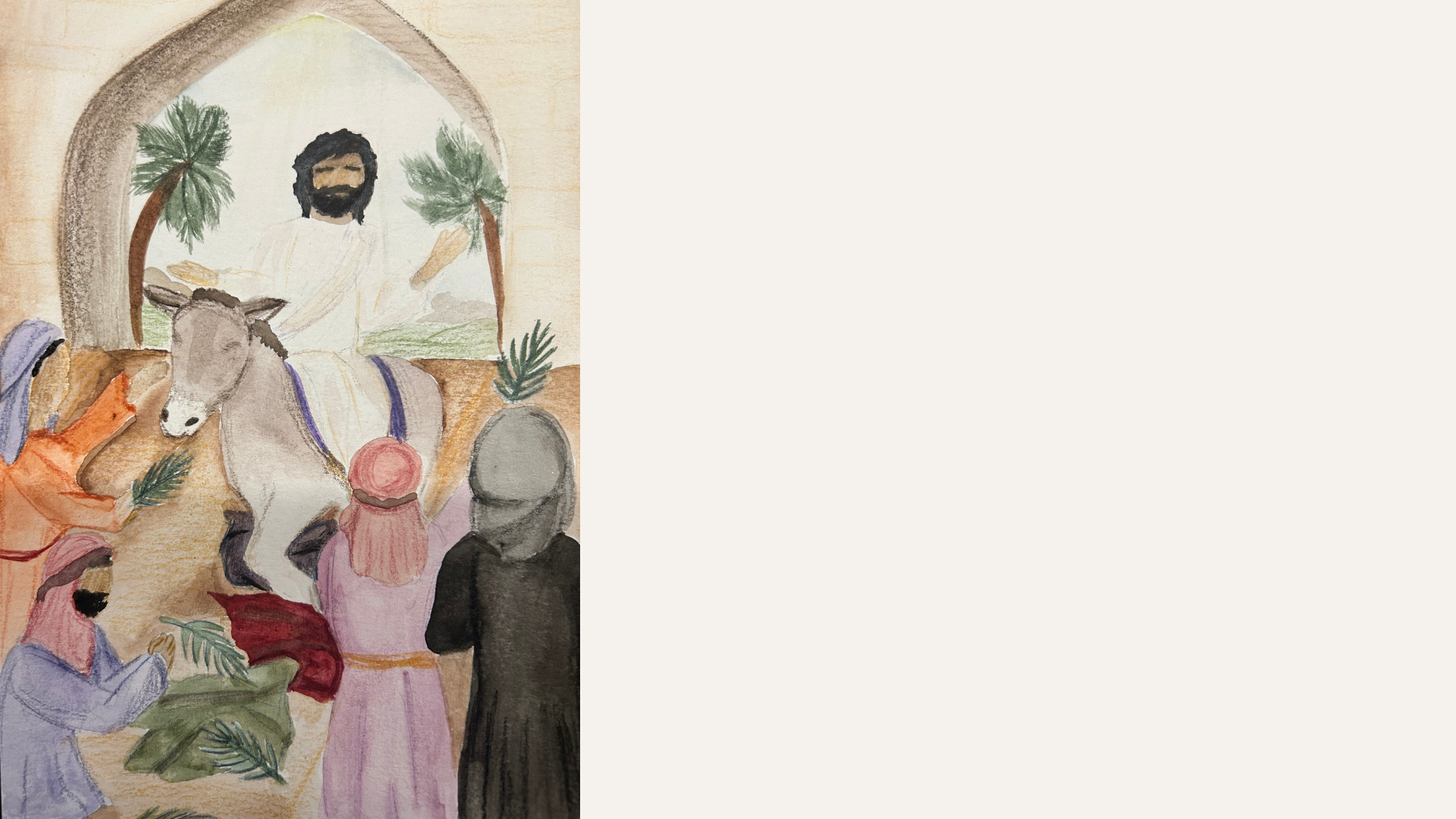
Jesus entered Jerusalem on a donkey, praise was abounding, even chaotic. He had the red carpet treatment as the crowd laid down their cloaks, treating him like royalty, spreading palm branches symbolic of victory. Victory over what? Sight to the blind? Healing of the sick? Liberation from evil spirits? Those weren’t victories! Jesus didn’t have to fight and defeat anyone to perform miracles. He spoke. That’s all! That’s power! His victory would come over death and separation from our Heavenly Father. The real miracle was redemption from sin, not restoration of health. The crowd's praise was empty of surrender to a Savior; it was praise for a prophet. They were fans, not followers.
What happened when Jesus’ celebrity status turned sour? When he was accused, arrested, and sentenced to death? Did the tabloids start a sensational story? Did the news stations host debates over whether or not Jesus deserved to die? Did the crowds revolt? No. No, they did not. They shouted just as loudly. They shouted, “Crucify Him!” Their triumphal praise was empty. They were fans, not followers.
Jesus carried our empty praise to the cross. He carried all of our emptiness! Hearts empty of hope. Lives empty of purpose. Souls empty of redemption. When we acknowledge and surrender to Christ, we find ourselves unable to not praise Him! We are followers, not fans. Our praise should not be conditional on our circumstances. We must praise in times of trouble because our circumstances do not change who He is. He is still our Redeemer. He is still the King of kings! Jesus carried your sin to the cross. He carried your emptiness to the cross. How have you responded to His victory? Are you a fan or a follower?
- Monday, March 30
Empty Understanding
Matthew 26:17–30
One of the rites of the church that has come down to us historically is what we have come to call “communion.” But we rarely think of why that word, communion, has been attached to what was once called the Passover seder. On that night, which all four gospels record, the disciples were well aware of what they were celebrating with Jesus in the upper room, but little realized what was really about to take place. The symbolism, that for many years was attached to the exodus, and the “passing over” of the angel of death, was about to become far more real to them. The cross awaited, but on that Thursday night, they were still living in the old covenant. Just before this night, as Jesus felt the burden of what was coming, He had made a couple of cryptic statements to His disciples. “Unless a grain of wheat falls into the earth and dies, it remains alone. But if it dies, it bears much fruit.” (John 12:24). Just a few verses later, Jesus declares, “Now judgment is upon this world; now the ruler of this world shall be cast out. (John 12:31)
Here is the enigma that is symbolized in the last Passover supper and the first communion. That night, Jesus redefined what the symbols meant; or rather, He clarified what they had really been pointing to all along. The death and the victory of Himself, the perfect Passover lamb. The angel of death would no longer have any hold on those who are in “communion” with Christ. In His death, our old self died, and became the living new self. And in our death, as Paul says, as we participate, we are declaring the death of Christ for us “until He comes.” (I Cor. 11:26) We look into the past, and see His body, broken for us. We look into the future, and see Him coming in victory, won in that ultimate Passover, when the ruler of this world was utterly cast down!
- Tuesday, March 31
Empty Loyalty
Matthew 26:36-56
Gethsemane is heavy. Jesus tells his disciples, “My soul is very sorrowful, even to death” (Matthew 26:38). He asks them to stay awake and pray, but they fall asleep. Soon after, Judas arrives and greets Jesus with a kiss. A routine greeting. Betrayal masked as loyalty.
It’s unsettling. Judas wasn’t a stranger. He was one of the twelve. He saw miracles, heard the teachings, and walked closely with Jesus. But being close didn’t mean he was truly loyal. The hardest part for me to reconcile is that his loyalty looked genuine on the surface, but it was completely empty inside. Hollow. If I’m honest, this is what makes the passage so uncomfortable. The empty loyalty of Judas doesn’t look like obvious rebellion. Sometimes, I wonder if his kind of loyalty shows up in my own life. It can look like routines, showing up but not really surrendering, or saying we follow Jesus but quietly choosing our own way when it matters most. True loyalty isn’t proven in public. It’s revealed in private moments of surrender. Gethsemane reminds us that it’s easy to follow Jesus when the crowd is cheering, but much harder when obedience comes with a cost.
In direct contrast, in Jesus’ darkest moment, when the cost was clear, He chose obedience. Suffering was close, but He still chose to obey. Not because it was easy, but because it was faithful. In full transparency, sometimes I see more of myself in Judas than in Jesus. There have been times when I was spiritually sleepy instead of watchful, when I held onto comfort instead of surrender, and when my loyalty was based more on convenience than conviction. But here’s the hope: Even when others were unfaithful, Jesus remained faithful. He carried their weakness, and He carries mine. He carries yours, too.
Jesus, expose the places where my loyalty is thin. Wake me up where I have grown complacent. Teach me to trust you enough to say, “Not my will, but Yours,” even when it costs me something.
- Wednesday, April 1
Empty Justice
Matthew 26:57-68
It’s not fair. It really isn’t. A child is born in a family that neglects or even mistreats them. Another is born in a loving, healthy home. One person is literally starving to death. Another has a full refrigerator. We feel it. It disturbs us. But it doesn’t tend to disturb us too much until injustice hits us personally in a life-changing way. A loved one dies far too soon. A crippling disease, accident, or malicious act takes away our abilities and comfort. The unfairness, the injustice, goes on and on. Where is God in all of it? If God is holy and good and just, why IS life unfair? We know sin is in the world and it is broken, but when injustice strikes us hard, the explanations we hear seem inadequate.
The chief priests and the whole Sanhedrin were looking for false evidence against Jesus so they could put Him to death…. Then the high priest tore his clothes and said, “He has spoken blasphemy! Why do we need any more witnesses? Look, now you have heard the blasphemy. What do you think?” “He is worthy of death,” they answered.
Then they spit in His face and struck Him with their fists. Others slapped Him and said, “Prophesy to us, Messiah. Who hit you?” -Matthew 26:59, 65-68
When we feel the hollow cruelty of injustice, God doesn’t offer many explanations. What He does is enter injustice with us. If we can know anything, it is that He understands what it feels like to have seemingly everything taken from you. He has felt the emptiness of injustice far more deeply than is even possible for us. He knows.
He also knows that injustice doesn’t have the last word. He knows where the story is leading, and our part in it. For while we do not and cannot understand the injustice of today, we can know that the clenched fist, the spitting lips, the cold nails, will ultimately lead to an empty tomb.
Father, when we feel the emptiness of injustice, please fill us with your presence and help us have confidence in your purpose.
- Thursday, April 2
Empty Courage
Matthew 26:69-75
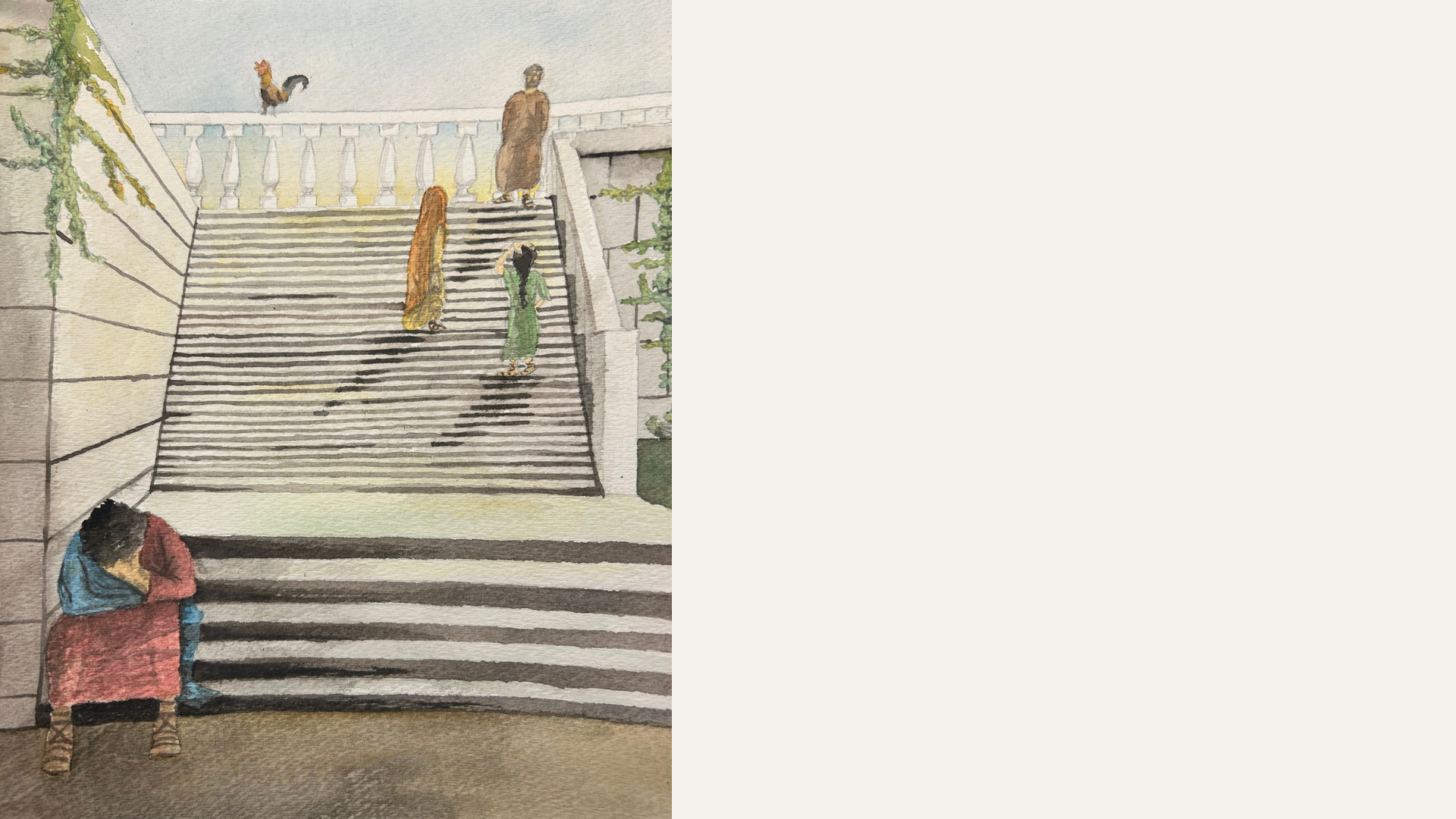
After the celebration of the Passover, Jesus told His disciples, “You will all fall away because of me this night.” He was speaking to all of the disciples. Everyone was silent but Peter, who declared that even if they all fell away, he would never fall away. Jesus spoke directly to Peter, “I tell you this very night, before the rooster crows, you will deny me three times.” In passionate boldness, Peter claims, “even if I must die with you, I will not deny you!”
Peter often appears fearless. It was Peter who crawled over the side of a boat in a violent storm to walk on water. Yet, it was Peter who sank when he took his eyes off Jesus. Peter disregarded the warnings of Jesus, falling asleep instead of spending time in prayer. Jesus warned him a second time, reminding Peter that “the Spirit is willing but the flesh is weak”.
We find ourselves here. What do you think Peter was thinking when he vowed his willingness to die with Jesus? He was thinking the same thing you and I think when we make promises we can’t keep, vows we are not able to fulfill.
He thought he could do it!
But the rooster crowed, just as Peter yelled, “I don’t know the man!” Beware not to judge, as we all have the potential to fall away given the right circumstances. Empty courage makes you think you are strong enough. We make promises because we believe we can fulfill them. That promise you made for better or worse….that promise to turn away from porn, or to never again yell discouraging words to your children. Every time you believe this time you can do it! Empty courage is the pretense of bravery that lacks the faith to follow through. The rooster crowed, and the words of Jesus flashed through his mind. He went away weeping bitterly. Peter was the first to recognize that Jesus was the Messiah, but now he has learned he is in desperate need of a Savior! Like Peter, take your head in your hands and repent. Confess your need for a Savior to fill every empty crevice of your heart.
- Friday, April 3
Empty Honor
Luke 23:26-49
There’s a scene in the final Lord of the Rings movie that my husband enjoys watching over and over. King Theoden and his men have come upon Pelenor Fields to vast armies of their enemy, yet Theoden rides in front of his men and addresses them loudly and confidently in the face of death. And, as they all shout “Death!” triumphantly together, even I am tempted to step through the screen and into the scene because the glory of this moment is practically tangible.
When we look at Christ’s road to Calvary, His humiliation is what we perceive. Those who surround Him have nothing but sneers and jeers for Him. The soldiers dress Him up in a mockery of His royalty. The crowd tries to urge Him to show his power so that they may yet see some kind of show. The religious elite finally feel free to shame Him as they have desired because they think they’ve taken His power and influence away. Even the criminals dying beside Him find enjoyment in their final moments by shaming Him. Jesus is alone and silent. Yet, we know what awaits after the darkest moments. What seems empty now will be more than full.
In our own lives, there’s a temptation to run after our own honor that makes us look good. We want to matter–to the people we love and to the world itself. But, too often, what we chase after has no eternal value and is gone in a moment. What is the worth of being remembered by the world if the price is our Lord saying, “‘I never knew you; depart from me, you workers of lawlessness.’” We must see past the temporary of what we desire to the lasting goodness and glory of God that He invites us to take part in. The honor that we should seek may often not feel like glory. It may instead feel like trudging uphill, trusting that it will be worth it all when we see Jesus.
Lord, give us the strength to trust that your honor is worth our sacrifice. Help us to know with all our heart that the pursuit of all else is empty and vain.
- Saturday, April 4
Empty Hope
Matthew 27:45-61
Hope is a very powerful emotion. Hope looks to the future in expectation. Hope gives excitement. Hope can sustain you through difficult circumstances. Hope can bind people together. Hope can also lead to disappointment and frustration when what we hope for doesn’t bear itself out. Sometimes, hope is empty.
I’m sure that there were quite a few people who were clinging to hope during the end of Jesus’ life. His family, friends, and disciples were probably hoping that there was going to be some way that He was going to get out of the situation He was in. Being sent back and forth between Pilate and Herod probably gave some hope that neither would convict Him. Once He was convicted, that hope became empty. Putting Jesus’ body in that tomb was an act that would have solidified the idea that their hope was not going to come to fruition.
The death and burial of Jesus crushed the hope that those around Jesus had that His life would go on as it had and He would continue His relationships and ministry as they were. That hope became empty, but it gave way to a new hope. A hope that everyone can choose.
When Jesus walked out of that tomb three days later, He offered a new hope to the world. A hope that looks to the future in expectation. A hope that gives excitement. A hope that can sustain us through difficult circumstances. A hope that binds us together. All we must do is accept the gift of salvation, and then the hope of eternity with our Savior becomes ours. Are you clinging to the empty hopes of this world, or are you looking to the hope that we have in Jesus?
- Sunday, April 5
Empty Tomb

Matthew 28:1-10
There is no greater relief than the fulfillment of hope. Not “I hope I find a good parking spot” hope, but desperate, all-eggs-in-one-basket hope. The followers of Jesus had put all their hope in Him. He was the Messiah, the One they had been waiting for, and three days earlier, Jesus had been humiliated and hung on a cross until dead, along with the hope they had in Him. Despite their lost hope, they still loved their Rabbi, whom they had followed for years. They wanted to give Him the honor and respect that was due to Him in death. As the Marys walked to the tomb where Jesus and their hope was laid, the hope that had been lost was gloriously raised with the Son of God! Jesus, the Messiah, had fulfilled His mission and brought hope back to them—and us!
The angel’s words to them are incredible! He knew what they had seen and how they felt. Yet he knew that hope was alive and well, and invites them to see for themselves…
“He is not here, for He has risen, as He said.
Come, see the place where He lay.”
Jesus, their Rabbi, the Savior of the world, was no longer lying in a tomb, but had been resurrected, along with the hope they had in Him! Hope was— and still is— alive and well!
We live in a world that often feels hopeless. We are tempted to place our hope in the things of this world, all of which are temporary, fleeting, and incapable of fulfilling the God-shaped hole in our lives. They will leave us feeling unfulfilled and empty. Yet for Christ-followers, our hope is in the One who is all-powerful, all-knowing, and ever-present! We don’t place our hope in the empty things of this world, but rather on the fact that the tomb is empty, death is dead, and hope is alive! May we live in that hope with assurance and joy, knowing that God has won, His victory secured, and that the Messiah is alive and well!
- ㅤ
Empty Praise: The Triumphal Entry
Written by: Christine Selby
Artwork by: Anna Calavitta
Empty Understanding: The Last Supper
Written by: Billy Ellis
Empty Loyalty: Gethsemene and Judas' Betrayal
Written by: Brandi Lauckner
Empty Justice: Trial Before the Sanhedrin
Written by: Brian Baker
Empty Courage: Peter's Denial
Written by: Ruth Dickey
Artwork by: Ashton Archer
Empty Honor: The Crucifixion
Written by: Audrey Jordan
Empty Hope: Death & Burial of Jesus
Written by: Jonathan Livermore
Empty Tomb: The Resurrection
Written by: Blake Jordan
Artwork by: Jen Brazil
Devotional Theme & Vision by:
Blaine Rogers
Edited by:
Hannah Lane
Designed by:
Chris Lauckner
Get Connected. Stay Connected.
Groups, teams, prayer, & more.